
Establish regional technology adoption hubs: CII report on smart manufacturing
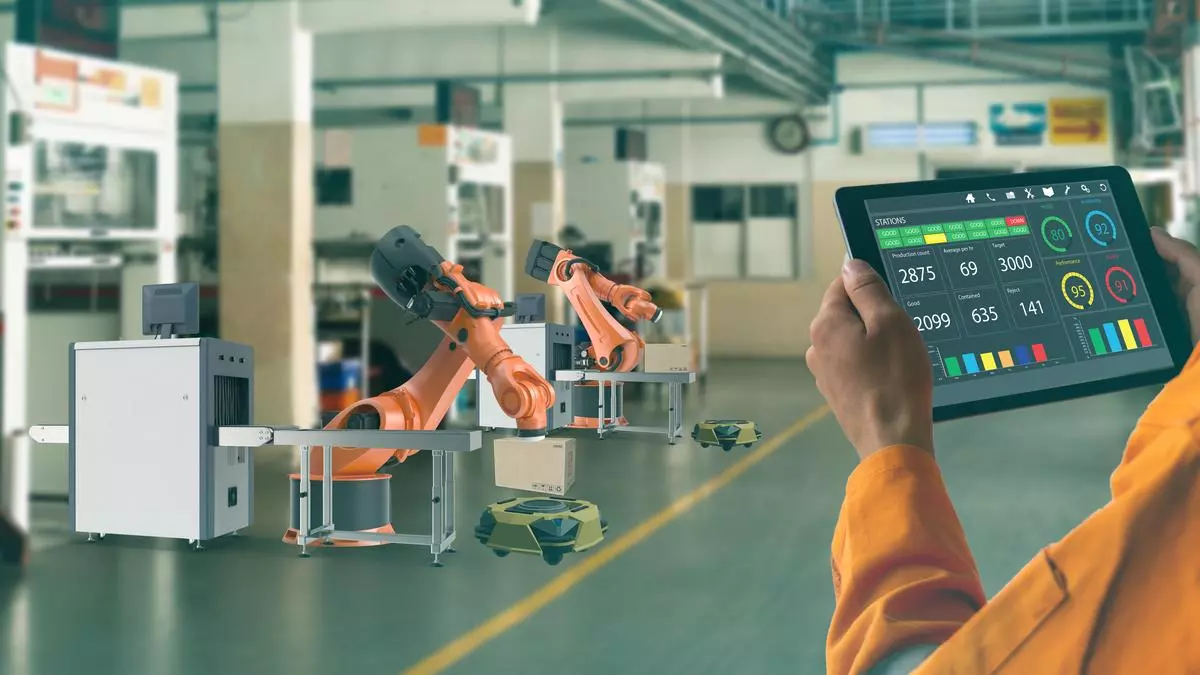
The Government should set up regional technology adoption hubs to provide shared access to advanced manufacturing technologies, Confederation of Indian Industry (CII) has suggested.
This could be done possibly in collaboration with industry associations like CII and other stakeholders, a new CII report on Smart Manufacturing said.
The report, titled ‘Smart Manufacturing: Unlocking India’s Potential,’ highlights the sector’s ongoing digital transformation and its critical role in achieving the ambitious goal of increasing the manufacturing GDP share to 25 per cent in the near future.
Besides recommending the fostering of public-private partnerships to establish shared technology hubs, the report has made a case for increasing budget allocations for technology, strengthening industry-academia collaboration, and implementing supportive policies to encourage broader adoption of smart manufacturing.
- Also read: Inox Wind secures top credit rating for short-term facilities
CII report said that the technology hubs would allow smaller manufacturers to use high-cost technologies on a pay-per-use basis, significantly lowering their individual investment requirements.
Each hub could partner with an Indian university, engaging students as part-time researchers. This collaboration would offer students practical experience in commercially oriented research and manufacturing settings.
The hubs would develop technology for commercial products and processes, allowing companies to test equipment and industrial procedures on pilot manufacturing lines. Additionally, they would ensure a steady supply of trained engineers and technicians to the private sector.
Shared resource models have been successful in other countries, such as Germany’s Fraunhofer Institutes, where SMEs can access state-of-the-art technology and expertise without bearing the full cost of ownership. This model helps distribute costs across multiple users, making cutting-edge technology more accessible.
Setting up these hubs would require initial investment but could be co-funded by the Government and industry stakeholders, CII report said.
The Government could provide seed funding, while private companies and industry associations could contribute through public-private partnerships (PPPs), CII report said.
The hubs could be located in industrial clusters to ensure easy access for manufacturers, it added.
- Also read: Honasa ships 99.2 million beauty products in 2024, skincare leads growth
The report showcases how cutting-edge technologies such as the Internet of Things (IoT), Artificial Intelligence (AI), Machine Learning (ML), robotics, and automation are reshaping the manufacturing landscape, driving optimisation, innovation, and global competitiveness. High-capital industries like Semiconductors, Aerospace, and Automotive are leading the charge in adopting these technologies, while traditional sectors like Textiles and Food Processing are gradually transitioning towards digitalisation.
Key findings reveal that while most manufacturers recognise technology adoption as a critical driver of profitability and competitiveness, current investments remain modest, with many allocating less than 10 per cent of their budgets. However, a shift towards higher investment—targeting 11-15 percent of budgets—is expected in the next two years, particularly in IoT, robotics, and Big Data.
Speaking about the report, Deepak Shetty, Chairman of the Council on Manufacturing Excellence, CII and CEO & Managing Director, JCB India Limited, said, “India’s manufacturing landscape is undergoing a significant transformation, driven by the rapid adoption of innovative technologies. This report explores the technological revolution reshaping manufacturing, highlighting how smart technologies are essential for boosting productivity and efficiency. By embracing these advancements, India can gain a competitive edge globally and establish itself as a manufacturing leader.”
Deepak Jain, Co-Chair of the Council on Manufacturing Excellence, CII and Chairman, Lumax Group, said, “This report highlights a transformative moment for India’s manufacturing sector, where advanced technologies are reshaping processes and addressing challenges like supply chain visibility to drive industrial excellence.”
Additionally, the report underscores the urgent need for workforce upskilling to bridge the skills gap and enable seamless adoption of advanced technologies.
Challenges such as high costs, unclear Return on Investment, and the integration of legacy systems persist, especially for small and medium enterprises (SMEs).
Virtual Reality Training Academy
In its report, CII has also called for creating a ‘Virtual Reality (VR) Training Academy’ for Manufacturing Skills.
VR offers an immersive, hands-on training experience that can significantly enhance learning outcomes, particularly for complex technologies. This approach allows workers to gain practical experience in a controlled, risk-free environment, accelerating their readiness for real-world implementation, the report said.
The VR Training Academy could be developed as a national initiative, with the Government partnering with technology companies and educational institutions to create the VR modules. Access to the academy could be provided through regional training centres and educational institution, CII report said.

Leave a Comment