
From algorithms to AI agents: We’re simplifying supply chain planning with LLMs
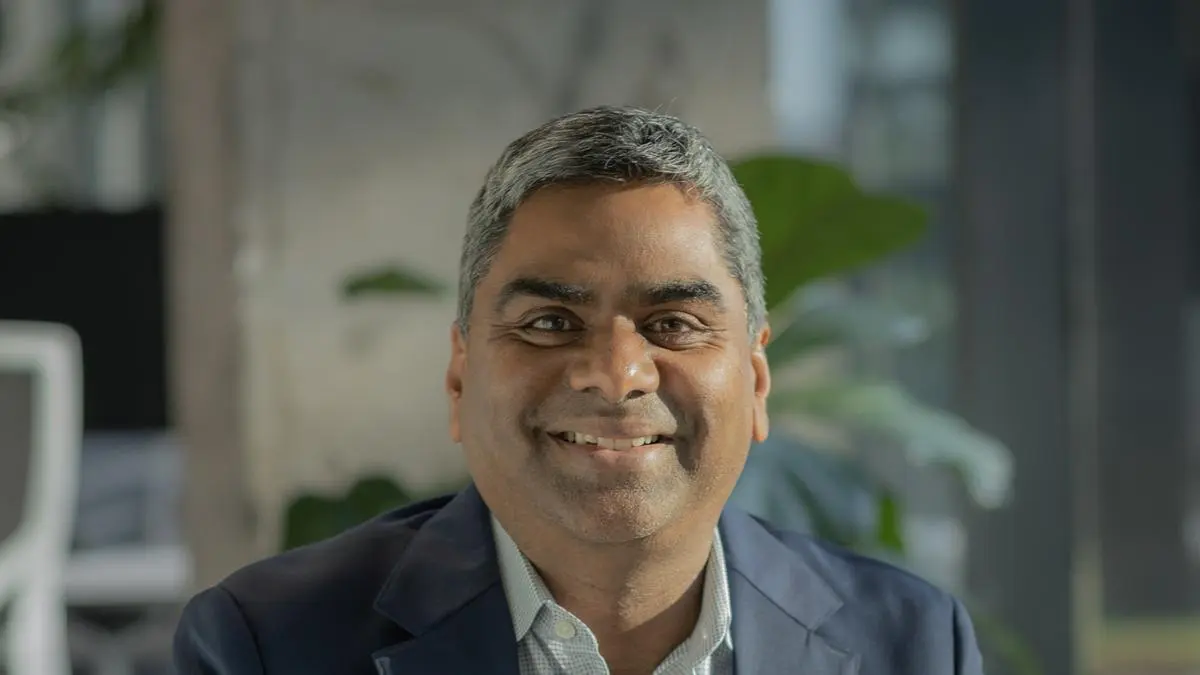
Chakri Gottemukkala, co-founder and chief executive officer of o9, started his entrepreneurial journey by starting the supply chain management technologies platform 10 years ago with a handful of employees. It’s now grown to cover 29 industry verticals with a base of 3,000 employees. The unicorn, which is now valued at about $4 billion after the infusion of $116 million last year, still has the two promoters holding the majority stake. Chakri, who was in Hyderabad for the launch of o9’s facility, talks about the challenges the companies face in the complex macroeconomic and geopolitical landscape by offering algorithm-based solutions. Excerpts:
What kind of challenges do you see in the overall supply chain space, and how can technology address them, particularly in the post-pandemic space with macroeconomic and geopolitical issues?
Two major forces drive value leakage in big enterprises – volatility and complexity. Volatility refers to the unpredictability of demand and supply due to disruptions in supply chains, changing business models, and geopolitical events. Complexity stems from a large number of products, markets, and intricate supply chains. Combined, volatility and complexity demand intelligent solutions and rapid decision-making. We address these challenges by constantly evolving our software and technology to model complex scenarios and automate decision-making. For example, we enable hyper-automation of daily decisions like production, shipping, and customer order promises. Our platform acts as a digital brain that brings all enterprise decisions together, fostering intelligent and connected decision-making. Technology enables faster scenario planning and quicker responses to the volatile and complex reality of today’s business environment.
How are LLMs going to change the way you work, given that you are already using algorithms?
The main business problem we aim to solve is simplifying implementations. Currently, configuring solutions for different industries requires significant knowledge and time. LLMs allow us to digitise this knowledge and create AI-powered agents to assist planning and consulting organisations. For example, managers can ask questions in natural English, and the system, equipped with AI, can understand the request, run the necessary algorithms, and provide answers. This removes the dependency on expertise and speeds up decision-making.
But there are challenges with hallucination and security when using LLMs. How are you addressing these?
We address the hallucination problem by not using LLMs to answer the entire question. Instead, we leverage their power to connect the dots and convert the question into an intelligent query for our system to answer. For security, we utilise our existing framework, which ensures data accessibility only to authorised personnel. This framework is enforced even when queries are made in natural English. Essentially, we leverage the language processing capabilities of LLMs while ensuring security and reliable computation through our system.
How are you going to train your employees, who are predominantly techies, to ask the right set of questions to utilise the power of LLMs in business applications?
The key is to convert the tribal knowledge in enterprises into digital knowledge. Tribal knowledge, or the knowledge that resides in people’s heads, leads to siloed information, an inability to learn from past experiences, and the dissipation of knowledge when employees leave. Our platform, the digital brain, allows the digitisation of this tribal knowledge. This means every forecast, every decision, and every outcome is stored and learned from, enabling fact-based decision-making and continuous improvement. This digital brain can even identify patterns and biases in individual decision-making styles, leading to more reliable and consistent decisions across the organisation. We are essentially bridging the gap between human thought processes and system understanding by transforming tribal knowledge into a dynamic, evolving, and accessible digital knowledge base.
Are you building your own LLM or using a third party LLM?
We are taking a multi-model approach. We are creating an architecture that can use both public LLMs and private LLMs trained on our domain-specific data. This allows us to leverage the power of large language models for general knowledge while also utilising specialised models for intricate industry-specific tasks. We aim to develop a system that can intelligently route questions to the most appropriate LLM, ensuring efficiency, accuracy, and security.
What are your growth plans for the next one to two years? Is an IPO part of the plan?
We are aiming for an IPO in the next two to three years. We have been putting the necessary processes in place, including ensuring predictability in our business and implementing stricter reporting and auditing procedures. However, we retain the option to decide whether to go public or not, as we are aware of both the advantages and disadvantages. Our long-term growth plan is to achieve 10x growth over the next five to ten years. We believe this is achievable given the vast opportunity in the market.
Published on January 20, 2025



Leave a Comment