
How do RF circuit boards integrate with other electronic components?
RF circuit boards integrate with other electronic components
RF (Radio Frequency) circuit boards are central to the design of systems that operate at high frequencies, such as wireless communication devices, radar systems, and satellite technologies. These boards are responsible for transmitting and receiving RF signals and must work seamlessly with various other electronic components to ensure the overall system functions efficiently and reliably. The integration of RF circuit boards with other electronic components is crucial for the performance of the system as a whole, as it allows for the smooth flow of signals, power, and data across different parts of the system. This article explores how RF circuit boards integrate with other electronic components, focusing on key elements like signal processing, power management, and mechanical design.
One of the primary ways that RF circuit boards integrate with other electronic components is through the signal processing components that handle the incoming and outgoing RF signals. These components include amplifiers, oscillators, mixers, and filters, which are designed to manipulate and condition the signals for further processing. The RF circuit board provides the platform where these components are connected, allowing the signal to flow through the circuit in a controlled manner.
For example, amplifiers on the rf circuit board boost the strength of signals so that they can be transmitted over long distances without losing quality. Oscillators generate the precise frequencies needed for the operation of the system, and mixers combine signals of different frequencies. Filters are also placed on the RF circuit board to remove unwanted frequencies or noise from the signals. The integration of these components into the RF circuit board requires careful design to ensure that each component interacts properly with others, minimizing signal loss and distortion.
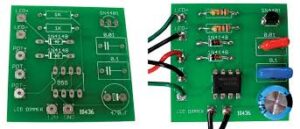
How do RF circuit boards integrate with other electronic components?
RF circuit boards also need to integrate with power management components to ensure that the system receives the right amount of power for each part of the circuit. Power management components like voltage regulators, power amplifiers, and batteries work in conjunction with the RF circuit board to provide a stable and reliable power supply. Voltage regulators ensure that components on the RF circuit board receive the correct voltage levels, which is essential for the proper operation of sensitive RF components like low-noise amplifiers (LNAs) and mixers.
In wireless communication systems, power amplifiers (PAs) integrated into the RF circuit board are used to boost the signal strength before transmission, allowing the system to send signals over long distances without degradation. RF circuit boards need to be carefully designed to manage power consumption and heat dissipation, ensuring that the components do not overheat and that the device operates efficiently.
RF circuit boards are often integrated with digital components that manage the overall operation of the system. These digital components include microcontrollers, FPGA (Field-Programmable Gate Array), and digital signal processors (DSP), which handle the processing of the data and control the switching of RF components. RF signals, which are analog by nature, often need to be converted into digital signals for further processing, which is where analog-to-digital converters (ADCs) and digital-to-analog converters (DACs) come into play.
RF circuit boards must include the necessary interface circuits, such as ADCs and DACs, to connect the analog RF circuits with the digital processing units. These converters ensure that the digital components can handle the information in the RF signals, perform calculations or logic operations, and then convert the results back to analog form for transmission. Integration between RF and digital components is crucial for efficient operation in systems such as smartphones, where RF components handle communication, and the digital components control the device’s functions.
In addition to electrical integration, RF circuit boards also need to be mechanically integrated with other components, including antennas, heatsinks, connectors, and enclosures. Antennas, which are essential for sending and receiving RF signals, are directly connected to the RF circuit board. The design of the board must account for the optimal placement of the antenna to ensure maximum signal strength and minimal interference. RF circuit boards also need to integrate with connectors, which allow for the physical connection of the circuit board to other devices or systems.
Thermal management is another important aspect of mechanical integration. RF circuits generate heat, especially at high frequencies, and excessive heat can reduce performance or damage components. To address this, RF circuit boards are often integrated with heat sinks and thermal vias, which help dissipate heat away from sensitive components. Proper thermal management is essential to ensure the longevity and reliable performance of both the RF and other electronic components on the circuit board.
At the system level, RF circuit boards must be integrated with other subsystems, including power supply units, control units, and communication interfaces, to ensure seamless operation. The integration process must consider the interaction between the RF circuit board and these other subsystems, ensuring that the entire system works together to perform the desired function efficiently. For example, in a radar system, the RF circuit board integrates with the power supply to provide the necessary energy for the transmission and reception of RF signals. The control unit manages the switching between different components, while the communication interface ensures that data is transmitted correctly between subsystems.



Leave a Comment