
India eyes 6G leadership, rural connectivity boost with renewed broadband investment
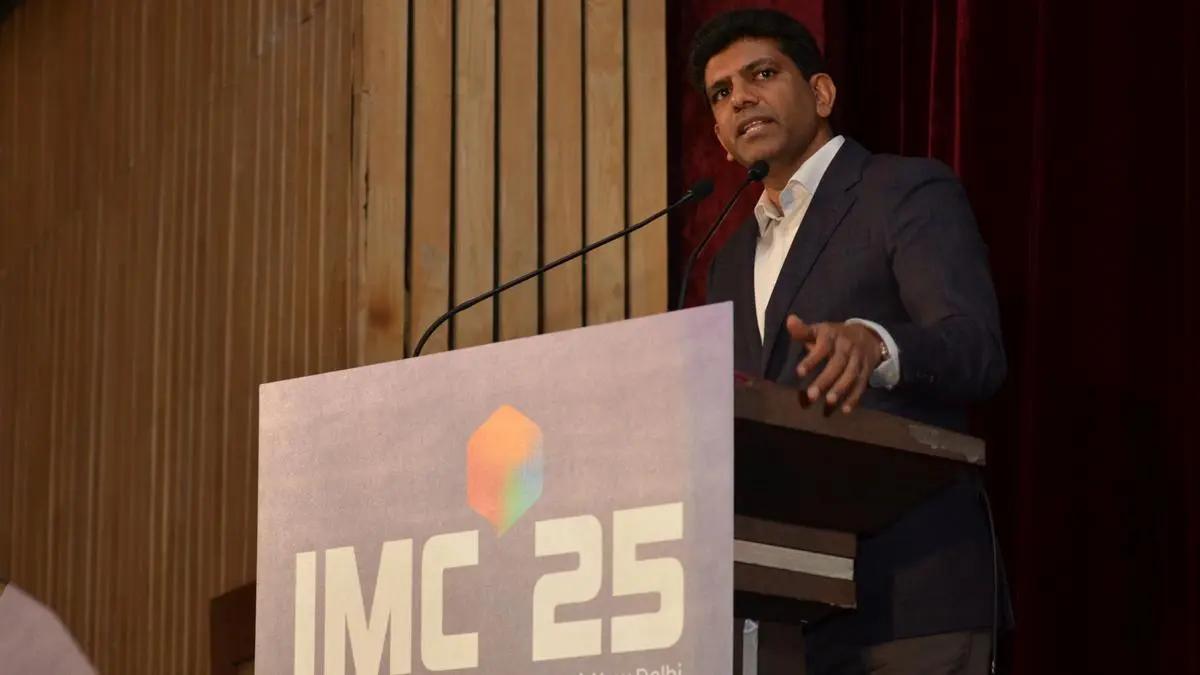
Chandra Sekhar Pemmasani, Minister of State for Communications and Rural Development at IMC 2025 Roadshow
India is set to invest an additional $18 billion to expand and maintain its rural broadband infrastructure, aiming to connect 40,000 more gram panchayats, highlighted Minister of State (MoS) for Communications & Rural Development, Chandra Sekhar Pemmasani. The country is said to bring high-speed internet access to 1.5 crore rural households through targeted subsidies.
digital divide
Speaking at the India Mobile Congress (IMC) 2025-organised Roadshow in Bengaluru, Pemmasani noted that the digital divide from over a decade ago has transformed into digital dominance. Currently, the country has almost 1.2 billion mobile subscribers, with the second largest network in the world. The roadshow was organised by the Department of Telecommunications (DoT) and Cellular Operators Association of India (COAI).
“Around one billion have broadband connectivity. This is 1,452 per cent times compared to 10 years ago. We also have the largest rural connectivity with Bharatnet, with close to 2.2 lakh villages covered. Over 95 per cent of the villages have 4G, and we have rolled out the fastest 5G in the world,” he said.
The State Communications Minister highlighted efforts to modernise outdated laws by aligning them with a future-ready regulatory framework while simplifying licensing processes and easing regulatory burdens. Spectrum management has shifted from a scarcity-driven model to one focused on efficiency, paving the way for the introduction of the Production Linked Incentive (PLI) scheme.
“Around ₹4,000 crore of investments came from private organisations, which generated ₹80,000 crore revenue and generated 25,000 jobs. Through the technology development fund, we have given close to ₹500 crore to 120 high-tech start-ups. Hopefully, all of these will enable us to develop quantum communications, automated networks, and indigenous core infrastructure. With 6G technology, we want to be able to contribute to global standards. We missed the boat for 2G to 5G. Hopefully, at least 10 per cent of the patents can be from India by 2030,” he said.
Lowest rates
India has also worked on indigenous 4G and 5G technology with start-ups and government organisations such as C-DoT, said Pemmasani. Today, the country stands as the second-largest phone manufacturer, exporting close to ₹1.8 lakh-crore worth a year. Alongside, India has the lowest data connectivity rates, allowing millions to connect, he said.
Published on July 1, 2025
Leave a Comment