
India leads in mobile usage, raises concerns of screen addiction
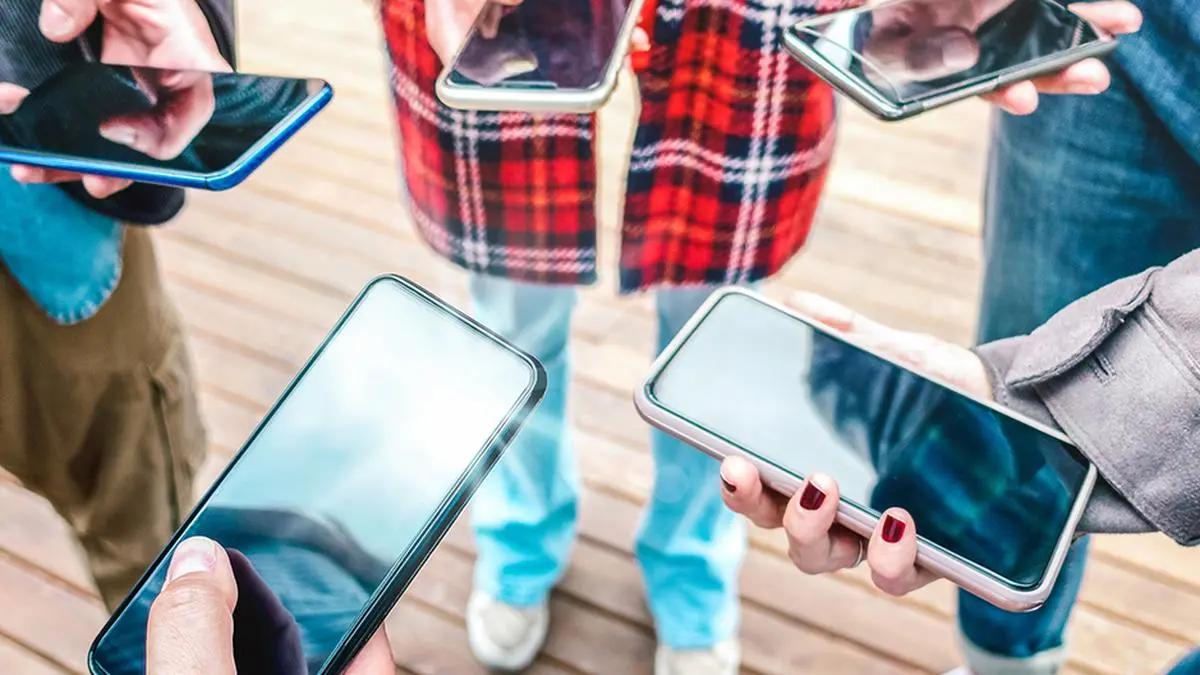
India spent 1.12 trillion hours on mobile devices in 2024, as per a report by Sensor Towers, more than any other country prompting concerns by mental health professionals over screen addiction in the country. It pipped runner-up Indonesia by 771.5 billion hours.
India shows highest YoY growth
India reported an annual growth of 13 per cent in 2024 in terms of number of hours spent on devices. This is the highest year-on-year growth among the top five countries in this category. The US in fact reported a marginal decline of 0.6 per cent in 2024.
Moreover, in terms of online activity, Indians spent 743.1 billion hours surfing social media. This excludes the time spent messaging or watching media and entertainment on platforms.
- Read also: Nettlinx board nods to raise ₹85 crore
Experts notice screen dependent behaviour
While stating that India’s high numbers could be associated to its population, Pooja Sengupta, faculty at the Department of Psychology at Bhawanipur Education Society College, still viewed screen usage as a point of concern. Taking the example of her students (18 to 21 years of age), Gupta talked about the impact of social media on memory and attention span.
“Previously, students could remember and note down long sentences. Now, they cannot remember phrases beyond three words. This is less than the general memory range of 5-9 words at a time. This is because social media usage has made information consumption passive, which in turn affects attention and memory,” said Gupta.
Similarly, Sonali Patankar, CEO and Founder of Responsible Netism, a social purpose initiative focused on online safety and cyber wellness, described growing screen usage as “pretty alarming” considering its impact on children. She argued that apps are often made to be addictive by design to be more engaging with users.
“There are built-in controls on some apps but 60 per cent of India is still digitally illiterate. Children as young as 1 to 2 years are being exposed to screens nowadays. Who takes responsibility for their access? Self-regulation does not work for adults let alone children,” she said.
- Read also: Government sends notice to Apple for performance issues in iPhones
Need to monitor impact of screen usage
Patankar also raised concern about how users often end up engaging with unfiltered content online leading to dependency on screens. She argued that monitoring such behaviour by surveys, reports is important to understand the severity of the issue. However, India currently does not maintain official data related to screen engagement or screen addiction.
“A robust system is required where people are taught to use devices with mindfulness,” said Patankar.
When asked whether there can be a limit for screen-usage, Gupta said it would be difficult to set a general range. However, she asked users to consider how screen-time may be affecting their daily routine, relations or even posture.
According to Dr. Milan Balakrishnan, Consultant Psychiatrist and Psychotherapist, people should consider a behavioural addiction to their devices when they find that their time on social media is increasing significantly.
“It’s like one hour today has become two hours tomorrow. When they don’t use social media, they’re more irritable. When they use social media, they’re in a better state of mind. Emotionally and cognitively, they’re preoccupied with social media even when they’re not using it and they experience real emotional irritability and physical restlessness when social media is restricted or stopped. The urge to get back to your phone or even the feeling that maybe there is a notification to check; those are equivalent to withdrawal symptoms that you would see in other addictions as well,” he said.


Leave a Comment