
Storytelling pleasures get sacrificed in futile search of a cold, winning formula
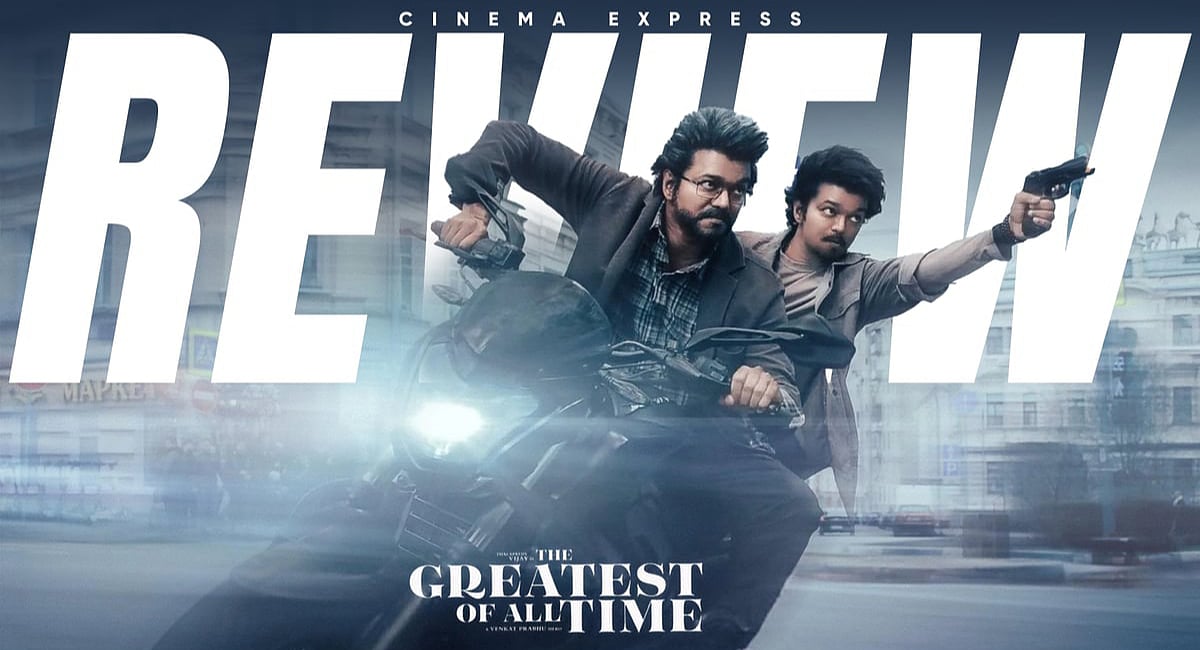
However, the truth is, the film lasts a long time, a really long time, beyond these portions as we shift from past to present. As the truth about Gandhi’s son, Jeevan/Sanjay, becomes evident to us, the film seems rather unsure about treating this very serious situation… seriously. This isn’t about Vijay playing the character in a bit of an unhinged way; it just feels like the film doesn’t quite make up its mind on what it wants to do with Sanjay. Given that the film establishes the Gandhi-Anu household with as much warmth and seriousness, it seems strange then that their reunion with Sanjay is as urgently dealt with.
This is particularly rankling given the truth we learn about Sanjay’s childhood. The premise is full of emotional promise, and yet, the film feels strangely detached and cold. The ideas are there, but the exploration isn’t. And for lack of this, Mohan’s Rajiv Menon—despite having a story that’s about vengeance and manipulation spanning much personal sacrifice—never really gets humanised. And he isn’t particularly entertaining either.
Meanwhile, the references to old cinema keep piling up. Something about Okkadu. Something about a couple of songs, including ‘Unakenna’ from Attagasam. Meanwhile, despite a rather moving back story, Sanjay gets treated by the film as a psychopath—and yet, the film, in the middle of all the action, forces him into not one but two songs whose placements remind you of old cinema too, and not in a good way.
These seem like decisions taken not in favour of the story or characters, but to momentarily capture the modern moviegoer, who’s trained by Instagram, it seems to expect constant dopamine hits. Perhaps story and character-loyalty in the reels generation is, to borrow Sanjay’s words to Gandhi, “a cringe expectation from a boomer”, but calls to nostalgia, like in the first half, are rewarding only when treated as flavour, not when they come at you in a disharmonious parade.
Every film, ultimately, is an exercise in storytelling, and in GOAT, that takes a backseat once the Thalapathy-Ilayathalapathy premise gets set up. Vijay is great as both characters (and I particularly enjoyed the young energy he brings to the role of Sanjay). Though there was much talk about the VFX potentially being a problem ahead of the film’s release, I had no real issues.
The problem—the more serious one to me—is the film lacking a moral centre. Sure, you could argue that Mankatha did too (and many other films too), and you’d be right, but there, the whole film is structured and executed as hyenas out to outwit each other. Here though, we are encouraged to see Gandhi as a good man; we are expected to empathise with him—and yet, there’s no hint that either of the parents had even a fleeting conversation with Sanjay about his childhood. Gandhi’s friends seem to matter for a while, but then, the purpose ascribed to Prabhudheva’s Kalyan feels forced, while Prashanth’s Sunil doesn’t quite get humanised in the face of a personal tragedy.
Meanwhile, Rajiv Menon may be a bad guy, but what of the innocent lives the ‘good’ guys take from him? Even that end, treated to work as wholesome entertainment, doesn’t exactly feel like it, given the icky resolution. The typical response to such concerns is that there isn’t much time in which to accomplish such emotional objectives. The retort then can be, if a film has the time for two ill-fitted duets, surely, primary storytelling concerns warrant more attention?
The ‘attractions’ meanwhile keep coming. Unexpectedly, a heroine joins a song. Unexpectedly, a star arrives at the end and is given a metaphorical responsibility. Someone suddenly sings, “Madurai veeran thaane…”
The film, which begins with a rather unrelated homage to Vijayakanth, seems to want to appease almost every fanbase. Why else would you have Sanjay suddenly going, “Adhayum thaandi punidhamaanadhu”? Are you not entertained?
Perhaps worried that we may not be all hopped up on these dizzying references, the film, in its last leg, throws at us the ultimate cheering machine: CSK and Dhoni and Chepauk. Not a recreation of the ‘Halamathi’ step, not a strange ‘Father of the Nation’ punchline, not even Dhoni being shown to execute last over heroics, seems to help fix the malaise. That’s because what the film suffers from isn’t a superficial wound. It’s a fracture—fractured emotions, fractured characters, fractured storytelling. And no number of bandaids—of dopamine hits—is going to cover that successfully…not for me, anyway.
This review was originally published on cinemaexpress.com


Leave a Comment