
Takes an engrossing premise and does agonisingly little with it
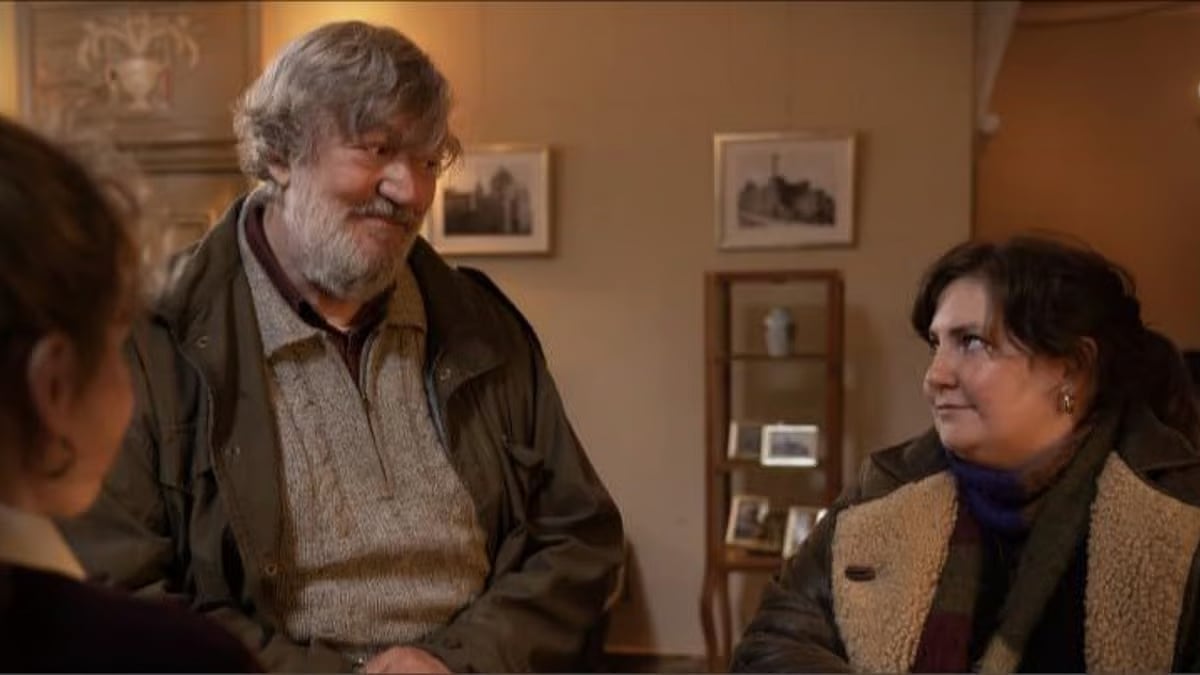
There are two ways in which characters in Julia von Heinz‘s Treasure, the film adaptation of the 1999 novel Too Many Men by Lily Brett, handle trauma. One is by Edek (Stephen Fry), who hides mountains of painful and direct experiences of Holocaust trauma under a blanket of humour and an apparent lack of seriousness. The other is by Ruth (Lena Dunham), Edek’s daughter, who, after a streak of personal tragedies, tries to confront her inherited trauma as a means of getting to know her roots.
Add a dysfunctional father-daughter dynamic and a post-Cold War setting to this, and we could have had an intensely moving and bittersweet personal drama about how, even decades after a tragedy, there are still pieces being picked—and how, there always might be, as if you’re diving into a never-ending deep sea.
What we end up getting, however, is a rather inert rendition of the Predictable Road Movie where Protagonist #1 subsequently warms up to Protagonist #2 after getting to know what they’ve been through. In this surprising decision to templatise the chilling concept of facing your trauma versus forgetting it, the film ends up becoming a rather confusing collection of haphazardly-strung, half-baked scenes that never really come together.
Take the first act, for example. We are introduced to Ruth, who’s waiting for her father Edek to arrive at the airport. He’s late, and she’s annoyed. They meet each other, she wants to use the loo, and she tells him to stay outside. He doesn’t, and she’s annoyed. They go to the railway station, and just before getting onto the train, he says they’ll go in a cab, and she’s annoyed again. We are never allowed to pause for a moment and take in what’s happening; it even feels as if the film isn’t all that interested in itself. Several scenes later, we get dumped plenty of expository information that should have been conveyed in all that time spent earlier, where, instead of stopping and letting its characters come to life, the film just moves from one uncooked scene to another. At one point, even Ruth seems to exclaim, “We’re off to a rough start.” I silently nodded in my seat.
This approach of never really letting the scenes feel like fully formed, coherent ideas, derails the film, which, when it does let the characters breathe, shows immense potential. There are glimpses of what the film could have been, especially in the portions where the usually jumpy Edek stops in his tracks in his hometown and reminisces. This is a feeling that anyone can relate to—that of visiting a place that once ‘belonged’ to you. But for some odd reason, heartfelt instances like these are minimised in the film, which instead chooses to spend its time on inorganic sentimentality.


Leave a Comment